




Why Seasonal Battery Maintenance Matters in Canada
Most lead-acid batteries—including flooded, AGM, and gel batteries—are affected by temperature extremes.
Cold temperatures reduce available battery capacity and make engines harder to start, while prolonged heat accelerates battery aging and can increase water loss in flooded batteries.
Without proper seasonal maintenance, batteries may experience:
- Corrosion
- Sulfation
- Electrolyte loss
- Reduced capacity
- Overcharging or undercharging
- Premature failure
- Unexpected equipment downtime
A simple seasonal inspection can identify potential problems before they become costly failures.
SPRING: Recharge, Inspect & Reconnect
Spring is the ideal time to bring batteries back into service after winter storage. Seasonal vehicles and equipment—including RVs, boats, ATVs, lawn tractors, and motorcycles—should be inspected before regular use.
Spring Maintenance Checklist
Checklist Item | What to Do |
Reconnect Stored Batteries | If the battery was disconnected for winter, inspect the terminals and cables before reconnecting. Confirm correct polarity and use appropriate insulated tools. |
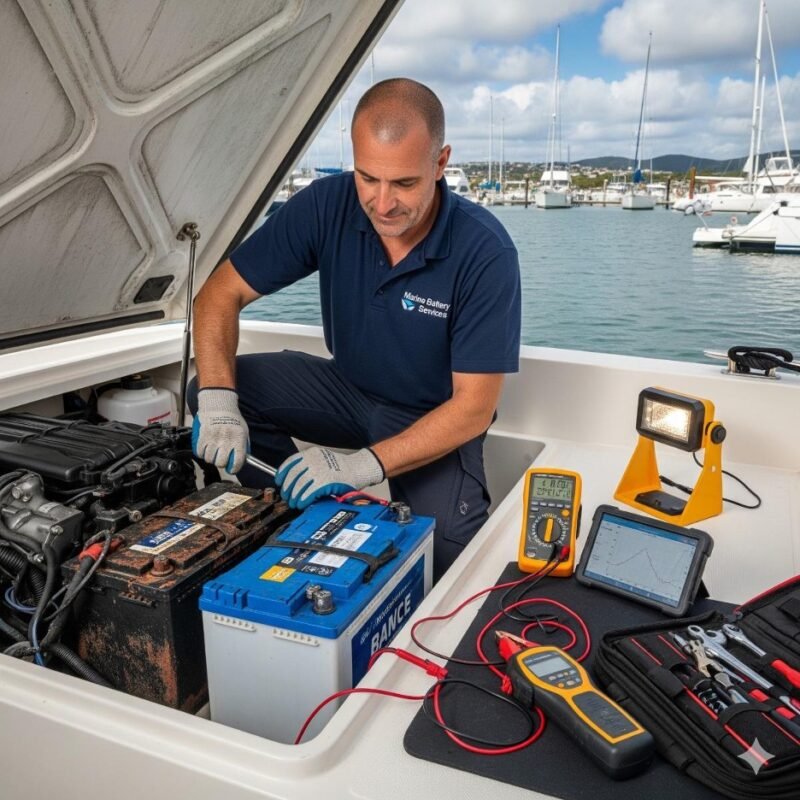
Perform a Visual Inspection | Check for cracks, swelling, leakage, corrosion, or other signs of damage. |
Clean Battery Terminals | Remove corrosion from terminals and cable connections using an appropriate battery terminal cleaner or brush. |
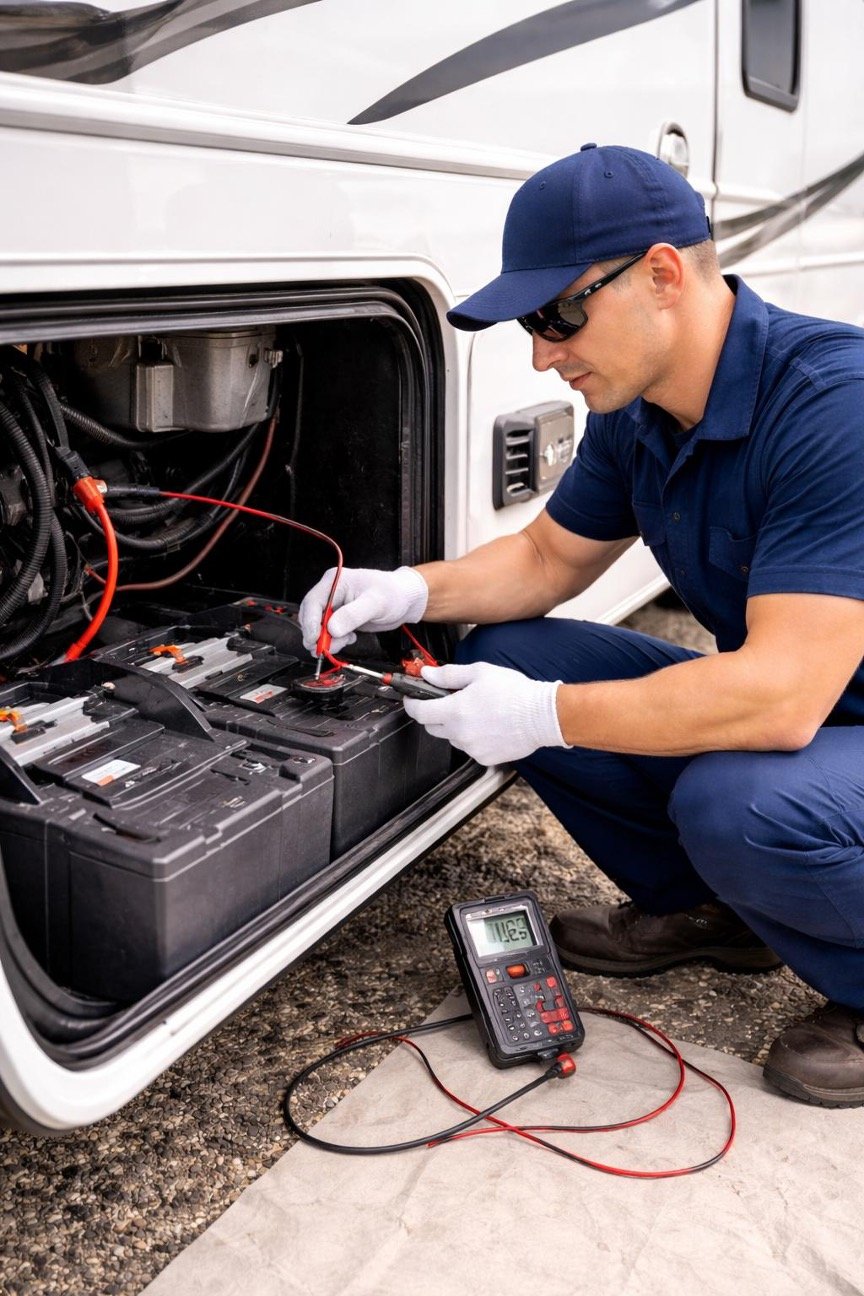
Check Battery Voltage | Use a multimeter or battery analyzer to check the state of charge. A fully charged, rested 12V lead-acid battery will typically measure around 12.6–12.8V, depending on battery type and conditions. |
Check Electrolyte Levels | For serviceable flooded lead-acid batteries, check electrolyte levels and add distilled water only when required. |
Recharge as Needed | If the battery is discharged, use a compatible smart charger to restore the battery to a full state of charge. |
Spring Tip: After charging, allow a lead-acid battery to rest before checking its open-circuit voltage. A rested voltage reading provides a better indication of its state of charge than a reading taken immediately after charging.
SUMMER: Protect Against Heat
High temperatures can accelerate battery aging. Under-hood temperatures can become significantly hotter than the surrounding air, while flooded batteries may lose electrolyte through evaporation.
Summer is especially important for vehicles, RVs, boats, solar systems, and equipment that operate or remain stored outdoors for extended periods.
Summer Maintenance Checklist
Checklist Item | What to Do |
Check Electrolyte Levels | Inspect serviceable flooded batteries regularly and add distilled water when necessary. Never add water to sealed AGM or gel batteries. |
Inspect Battery Mounting | Make sure the battery is securely mounted to minimize vibration and movement. |
Check for Heat Exposure | Where practical, protect batteries from excessive engine or environmental heat. |
Check Charging Voltage | Inspect alternator, charger, and solar-controller operation to ensure the battery is not being overcharged or undercharged. |
Inspect Terminals & Cables | Check for corrosion, loose connections, damaged cables, or excessive resistance. |
Monitor Stored Vehicles | If a vehicle will sit unused for extended periods, use a compatible battery maintainer to prevent excessive discharge. |
Summer Tip: Heat is one of the biggest contributors to lead-acid battery aging. Keeping batteries properly charged and minimizing unnecessary heat exposure can help extend service life.
FALL: Prepare for Winter
Fall is the best time to identify a weak battery before freezing temperatures arrive. A battery that is marginal in mild weather may fail when temperatures drop significantly.
Fall Maintenance Checklist
Checklist Item | What to Do |
Perform a Battery Test | Conduct a suitable load or conductance test to evaluate battery condition and starting capability. |
Inspect Cables & Connections | Check for loose terminals, corrosion, damaged cables, and poor connections. |
Clean & Protect Terminals | Clean corrosion and apply an appropriate terminal protectant where recommended. |
Check State of Charge | Keep batteries adequately charged, particularly on vehicles and equipment used infrequently. |
Inspect Battery Compartments | Ensure battery compartments are clean, dry, and properly ventilated where required. |
Replace Weak Batteries | Consider replacing batteries that fail testing or show significant deterioration before winter arrives. |
Fall Tip: Don’t wait for the first cold snap to discover a weak battery. Testing in the fall gives you time to replace a marginal battery before it leaves you stranded.
WINTER: Protect Against the Cold
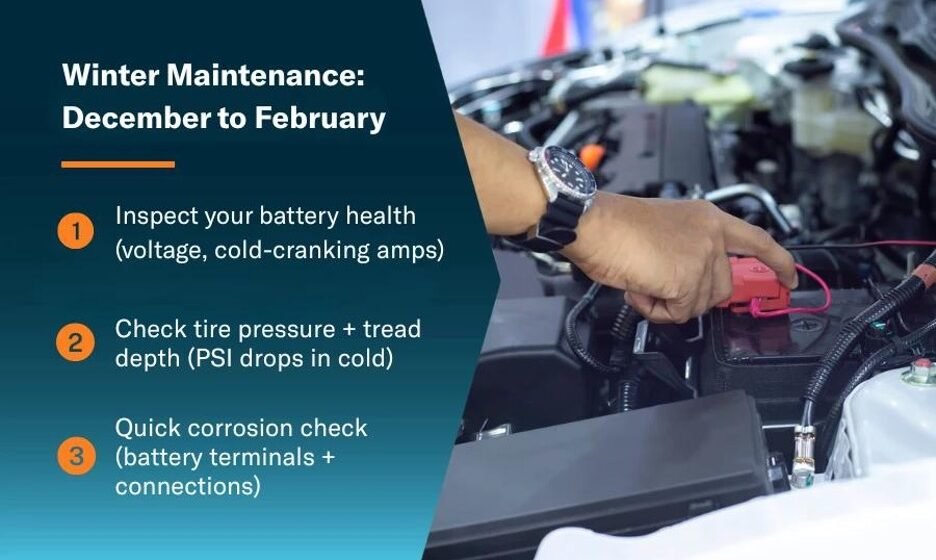
Cold temperatures can significantly reduce the available capacity of lead-acid batteries. At the same time, starting an engine requires more power because engine oil becomes thicker and mechanical resistance increases.
A fully charged battery is much better equipped to withstand freezing temperatures than a deeply discharged battery.
Winter Maintenance Checklist
Checklist Item | What to Do |
Keep the Battery Charged | Maintain an adequate state of charge. A deeply discharged lead-acid battery is more vulnerable to freezing and damage. |
Use a Battery Heater When Appropriate | Battery blankets or heater pads can be useful in extremely cold climates when compatible with the battery and application. |
Use a Battery Maintainer | For vehicles and equipment stored for extended periods, use a charger/maintainer designed for the specific battery type. |
Reduce Unnecessary Electrical Loads | Avoid excessive use of accessories while the engine is off, particularly during cold weather. |
Inspect Before Starting | Check for visible damage, leakage, severe corrosion, or swelling before attempting to use the battery. |
Park Indoors When Possible | Garage storage can reduce exposure to extreme temperatures and make starting easier. |
Winter Tip: Avoid charging a lithium battery below its manufacturer’s specified minimum charging temperature. Many LiFePO₄ batteries include a low-temperature charging cutoff, while some models are equipped with integrated heating systems.
Off-Season Battery Storage Best Practices
Proper storage is essential for seasonal equipment such as RVs, boats, ATVs, motorcycles, lawn tractors, and other recreational equipment.
Before putting equipment away for an extended period:
- Fully charge the battery using a charger compatible with the battery chemistry.
- Disconnect the battery from electrical loads to prevent parasitic drain.
- Store the battery in a cool, dry location where appropriate for the battery type.
- Use a compatible battery maintainer if recommended by the battery manufacturer.
- Inspect the battery periodically for corrosion, damage, or abnormal discharge.
- Follow the manufacturer’s storage recommendations, particularly for lithium batteries.
Important:
Storage requirements vary by battery chemistry. Flooded lead-acid, AGM, gel, and lithium batteries should not all be treated the same way. Always follow the manufacturer’s charging, storage, and temperature guidelines.
Tools & Products for Seasonal Battery Maintenance
Having the right tools makes routine battery maintenance easier and more reliable.
Tool / Product | Recommended Use |
Smart Battery Charger | Charging and maintaining batteries during storage |
Battery Load Tester | Evaluating starting battery performance |
Battery Analyzer | Checking battery condition and electrical performance |
Battery Terminal Brush | Removing corrosion and buildup |
Terminal Protection Products | Helping protect terminals against corrosion |
Battery Blanket / Heater | Cold-weather battery protection where appropriate |
Battery Monitor | Monitoring voltage, state of charge, and battery performance |
Explore our Battery Maintenance Accessories for tools and products designed to help keep your batteries performing reliably year-round.
Get Expert Help With Battery Maintenance
Battery maintenance requirements depend on several factors, including battery chemistry, application, climate, charging system, and storage conditions.
Whether you’re preparing a vehicle for a Canadian winter, getting an RV ready for summer travel, putting a boat into storage, or maintaining a backup power system, using the right maintenance approach can make a significant difference.
If you’re unsure which charger, maintainer, tester, or battery is right for your application, our team can help you choose the appropriate solution.
Conclusion
Battery failure is often preventable with the right maintenance routine.
Following a seasonal battery maintenance schedule can help you:
- Reduce unexpected battery failures
- Extend battery service life
- Maintain reliable starting performance
- Improve charging performance
- Reduce equipment downtime
- Avoid unnecessary battery replacements
Canada’s weather can be hard on batteries—but with the right seasonal maintenance, you can keep your automotive, RV, marine, recreational, and backup power batteries ready for whatever the season brings.
Bookmark this guide and check your batteries at the start of every season.

 Account
 Categories
 Battery Size
 Search
 Compare
 Top
Top